Had a Great Love Then Never Heard Frin Them Again
- For other uses, see Alexander (disambiguation).

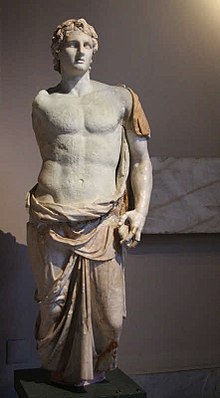
Alexander III of Mecedon (20/21 July 356 BC – 11 June 323 BC), normally known as Alexander the Great, was a rex of the aboriginal Greek kingdom of Macedon. He succeeded his father King Philip 2 to the throne at the age of 20, and spent most of his ruling years conducting a lengthy war machine entrada throughout Western Asia and Northeastern Africa. By the historic period of thirty, he had created one of the largest empires in history, stretching from Greece to northwestern Republic of india. He was undefeated in battle and is widely considered to be one of history's greatest and most successful military commanders.
Quotes [edit]


- What an excellent equus caballus practise they lose, for want of address and disrespect to manage him! ... I could manage this horse improve than others practice.
- Statement upon seeing Bucephalas being led away as useless and beyond training, as quoted in Lives past Plutarch, as translated by Arthur Hugh Clough
- Know ye not that the end and object of conquest is to avoid doing the aforementioned thing equally the conquered?
- Every bit quoted in Lives by Plutarch, VII, "Demosthenes and Cicero. Alexander and Caesar" (twoscore.ii), as translated by Bernadotte Perrin
- Holy shadows of the dead, I'one thousand not to blame for your fell and biting fate, but the accursed rivalry which brought sister nations and blood brother people, to fight one another. I do non feel happy for this victory of mine. On the opposite, I would be glad, brothers, if I had all of yous continuing here next to me, since we are united by the same language, the aforementioned blood and the same visions.
- Addressing the dead Hellenes (the Athenean and Thebean Greeks) of the Battle of Chaeronea, as quoted in Historiae Alexandri Magni by Quintus Curtius Rufus
- If I were not Alexander, I should wish to exist Diogenes.
- Later Diogenes of Sinope who was lying in the sun, responded to a query past Alexander asking if he could do anything for him with a respond requesting that he stop blocking his sunlight. Equally quoted in "On the Fortune of Alexander" by Plutarch, 332 a-b
- I do not steal victory.
- Reply to the suggestion past Parmenion, before the Battle of Gaugamela, that he set on the Persian camp during the night, reported in Life of Alexander past Plutarch, equally quoted in A History of Greece to the Death of Alexander the Neat (1900) by John Bagnell Coffin
- If it were non my purpose to combine barbarian things with things Hellenic, to traverse and civilize every continent, to search out the farthest parts of land and sea, to push the bounds of Macedonia to the uttermost Ocean, and to disseminate and shower the blessings of the Hellenic justice and peace over every nation, I should not be content to sit quietly in the luxury of idle power, but I should emulate the frugality of Diogenes. But equally things are, forgive me Diogenes, that I imitate Herakles, and emulate Perseus, and follow in the footsteps of Dionysos, the divine author and progenitor of my family, and desire that victorious Hellenes should dance again in India and revive the memory of the Bacchic revels amidst the roughshod mountain tribes beyond the Kaukasos...
- As quoted in "On the Fortune of Alexander" by Plutarch, 332 a-b
- Our enemies are Medes and Persians, men who for centuries have lived soft and luxurious lives; we of Macedon for generations past have been trained in the difficult schoolhouse of danger and war. Above all, we are free men, and they are slaves. There are Greek troops, to be sure, in Persian service — but how different is their crusade from ours! They will exist fighting for pay — and non much of at that; we, on the reverse, shall fight for Greece, and our hearts will be in it. As for our foreign troops — Thracians, Paeonians, Illyrians, Agrianes — they are the best and stoutest soldiers in Europe, and they will detect as their opponents the slackest and softest of the tribes of Asia. And what, finally, of the two men in supreme control? You take Alexander, they — Darius!
- Addressing his troops prior to the Boxing of Issus, every bit quoted in Anabasis Alexandri by Arrian Book II, 7
- Your ancestors came to Republic of macedonia and the rest of Hellas [Hellenic republic] and did us great impairment, though we had done them no prior injury. I have been appointed leader of the Greeks, and wanting to punish the Persians I have come to Asia, which I took from you lot.
- Alexander's letter to Farsi rex Darius Iii of Persia in response to a truce plea, as quoted in Anabasis Alexandri by Arrian; translated as Anabasis of Alexander by P. A. Brunt, for the "Loeb Edition" Book II 14, 4
- And then would I, if I were Parmenion.
- As quoted in Lives by Plutarch, after Parmenion suggested to him afterwards the Boxing of Issus that he should have Darius 3 of Persia's offer of an brotherhood, the manus of his daughter in marriage, and all Minor Asia, saying "If I were Alexander, I would accept the terms" (Variant translation: I would accept it if I were Alexander).
- Variants: I also, if I were Parmenion. Merely I am Alexander.
So would I, if I were Parmenion.
So should I, if I were Parmenion.
So should I, if I were Parmenion: but as I am Alexander, I cannot.
I would do it if I was Parmenion, simply I am Alexander.
If I were Parmenion, that is what I would do. But I am Alexander and then will answer in another style.
So would I, if I were Parmenion, merely I am Alexander, so I volition send Darius a different answer.
If I were Perdicas, I shall not neglect to tell you, I would have endorsed this arrangement at in one case, but I am Alexander, and I shall not practice information technology. (as quoted from medieval French romances in The Medieval French Alexander (2002) by Donald Maddox and Sara Sturm-Maddox, p. 81)
- Youths of the Pellaians and of the Macedonians and of the Hellenic Amphictiony and of the Lakedaimonians and of the Corinthians... and of all the Hellenic peoples, join your fellow-soldiers and entrust yourselves to me, so that nosotros can move against the barbarians and liberate ourselves from the Persian chains, for equally Greeks nosotros should not exist slaves to barbarians.
- Every bit quoted in the Historia Alexandri Magni of Pseudo-Kallisthenes, 1.15.1-4
- Now you lot fear punishment and beg for your lives, so I will allow y'all complimentary, if not for whatsoever other reason so that yous tin see the difference between a Greek king and a barbaric tyrant, so practice not expect to suffer whatever harm from me. A rex does non impale messengers.
- As quoted in the Historia Alexandri Magni of Pseudo-Kallisthenes, 1.37.9-13
- Are you nonetheless to learn that the end and perfection of our victories is to avoid the vices and infirmities of those whom we subdue?
- As quoted in Lives by Plutarch, as translated by Arthur Hugh Clough
- To the strongest!
- Later on existence asked, by his generals on his deathbed, who was to succeed him. It has been speculated that his vocalisation may have been indistinct and that he may take said "Krateros" (the name of one of his generals), only Krateros was non around, and the others may have chosen to hear "Kratistos" — the strongest. As quoted in The Mask of Jove: a history of Graeco-Roman civilization from the death of Alexander to the decease of Constantine (1966) by Stringfellow Barr, p. 6
- There is cypher impossible to him who will endeavor.
- On taking charge of an set on on a fortress, in Pushing to the Front, or, Success under Difficulties : A Book of Inspiration (1896) by Orison Swett Marden, p. 55
- I consider non what Parmenion should receive, but what Alexander should give.
- On his gifts for the services of others, equally quoted in Dictionary of Phrase and Legend: Giving the Derivation, Source, or Origin of Common Phrases, Allusions, and Words That Have A Tale To Tell (1905) by Ebenezer Cobham Brewer, p. xxx
- Variant: It is not what Parmenio should receive, merely what Alexander should give.
- quoted in Alexander : A History of the Origin and Growth of the Art of War from Primeval Times to the Battle Of Ipsus, B. C. 301 (1899) by Theodore Ayrault Dodge
- Sex and sleep alone make me conscious that I am mortal.
- As quoted in Alexander the Great (1973) by Robin Lane Play a trick on
- Unsourced variant : Only sex activity and sleep make me conscious that I am mortal.
- Shall I pass by and leave you lying there because of the expedition you led against Hellenic republic, or shall I set you up once more considering of your magnanimity and your virtues in other respects?
- Pausing and addressing to a fallen statue of Xerxes the Neat
- Plutarch. The age of Alexander: 9 Greek lives. Penguin, 1977. p. 294
- Dinocrates, I appreciate your design equally excellent in composition, and I am delighted with it, simply I apprehend that anybody who should institute a city in that spot would be censured for bad sentence. For as a newborn babe cannot be nourished without the nurse's milk, nor conducted to the approaches that lead to growth in life, so a city cannot thrive without fields and the fruits thereof pouring into its walls.
- Vitruvius, De Architectura Bk. 2, Introduction, Sec. 3
- For my part, I assure you, I had rather excel others in the knowledge of what is excellent, than in the extent of my power and rule.
- Quoted by Plutarch in Life of Alexander from Plutarch'south Lives as translated past John Dryden (1683)
Disputed [edit]

An army of sheep, led by a lion, is better than an army of lions, led by a sheep.
- An army of sheep led by a panthera leo is improve than an regular army of lions led by a sheep.
- Attributed to Alexander, as quoted in The British Boxing Fleet: Its Inception and Growth Throughout the Centuries to the Present Mean solar day (1915) by Frederick Thomas Jane, merely many variants of similar statements be which have been attributed to others, though in enquiry washed for Wikiquote definite citations of original documents take not however been found for any of them:
- I should prefer an army of stags led by a lion, to an army of lions led by a stag.
- Attributed to Chabrias, who died around the time Alexander was born, thus his is the earliest life to whom such assertions have been attributed; as quoted in A Treatise on the Defence of Fortified Places (1814) by Lazare Carnot, p. fifty
- An regular army of stags led past a lion would be ameliorate than an ground forces of lions led by a stag.
- Attributed to Chabrias, A History of Ireland (1857) by Thomas Mooney, p. 760
- An army of stags led by a lion is superior to an army of lions led past a stag.
- Attributed to Chabrias, The New American Cyclopaedia : A Popular Lexicon of General Cognition (1863), Vol. four, p. 670
- An ground forces of sheep led past a panthera leo are more to be feared than an ground forces of lions led by a sheep.
- Attributed to Chabrias, The Older Nosotros Go, The Better Nosotros Were, Marine Corps Sea Stories (2004) past Vince Crawley, p. 67
- It is better to take sheep led by a lion than lions led by a sheep.
- Attributed to Polybius in Between Spenser and Swift: English Writing in Seventeenth Century Ireland (2005) past Deana Rankin, p. 124, citing A Contemporary History of Affairs in Ireland, from 1641 to 1652 (1880) by John Thomas Gilbert Vol. I, i, p. 153 - 157; but conceivably this might be reference to Polybius the historian quoting either Alexander or Chabrias.
- An regular army equanimous of sheep but led by a king of beasts is more powerful than an army of lions led past a sheep.
- "Proverb" quoted by Agostino Nifo in De Regnandi Peritia (1523) as cited in Machiavelli - The First Century: Studies in Enthusiasm, Hostility, and Irrelevance (2005) by Mathew Thomson, p. 55
- Greater is an army of sheep led by a king of beasts, than an army of lions led past a sheep.
- Attributed to Daniel Defoe (c. 1659 - 1731)
- I am more afraid of ane hundred sheep led past a panthera leo than 1 hundred lions led by a sheep.
- Attributed to Charles Maurice de Talleyrand-Périgord (1754 – 1838) Variants: I am more afraid of an regular army of 100 sheep led by a panthera leo than an ground forces of 100 lions led by a sheep.
I am not afraid of an army of one hundred lions led by a sheep. I am afraid of regular army of 100 sheeps led by a lion.
- Attributed to Charles Maurice de Talleyrand-Périgord (1754 – 1838) Variants: I am more afraid of an regular army of 100 sheep led by a panthera leo than an ground forces of 100 lions led by a sheep.
- Variants quoted as an bearding proverb:
Better a herd of sheep led by a lion than a herd of lions led by a sheep.
A flock of sheep led by a lion was more powerful than a flock of lions led past a sheep.
An army of sheep led by a lion would defeat an ground forces of lions led by a sheep.
It were meliorate to have an army of sheep led by a lion than an regular army of lions led by a sheep.
An regular army of sheep led past a lion, volition defeat an army of lions led by a sheep.
An army of sheep led by a lion would exist superior to an army of lions led by a sheep.
Unsourced attribution to Alexander: I would not fear a pack of lions led by a sheep, but I would ever fear a flock of sheep led by a king of beasts. - As one lion overcomes many people and as one wolf scatters many sheep, and so likewise will I, with one give-and-take, destroy the peoples who have come confronting me.
- This slightly similar argument is the only quote relating to lions in The History of Alexander the Great, Being the Syriac Version of the Pseudo-Callisthenes (1889) equally translated past Due east. A. Wallis Budge, just it is attributed to Nectanebus (Nectanebo II).
- In that location are no more worlds to conquer!
- Argument portrayed every bit a quotation in a 1927 Reader'southward Digest commodity, this probably derives from traditions virtually Alexander lamenting at his father Philip'south victories that there would be no conquests left for him, or that subsequently his conquests in Egypt and Asia at that place were no worlds left to conquer.
- Some of the oldest accounts of this, as quoted past John Calvin state that on "hearing that at that place were other worlds, wept that he had not yet conquered one."
- This may originate from Plutarch'southward essay On the Tranquility of Mind, part of the essays Moralia: Alexander wept when he heard Anaxarchus discourse about an space number of worlds, and when his friends inquired what ailed him, "Is it not worthy of tears," he said, "that, when the number of worlds is space, we have not still go lords of a single i?" [1]
- There are no more other worlds to conquer!
- Variant attributed equally his "last words" at a few sites on the internet, but in no published sources.
Quotes nigh Alexander [edit]
Information technology is better to believe in men too rashly, and regret, than believe also meanly. Men could be more than than they are, if they would effort for it. He has shown them that. … Those who look in mankind but for their own littleness, and brand them believe in that, kill more than he ever will in all his wars. ~ Mary Renault
- What is the purpose of adventuring around the globe? A male monarch must be an administrator. ... Alexander was a homo full of great sound, lighting, and thunderbolt; [he was] similar a cloud in spring or summer, which passed over the kings of the earth, rained upon them, and disappeared—indeed a summer's cloud disappears very soon [maxim italicized].
- Abu'l-Fazl Bayhaqi, Tarikh-i Bayhaqi, Volume Half dozen, edited by Ali-Akbar Fayyaz, pages 118-119; in context of praising the Ghaznavid kings
- Alexander sacrificed to the gods to whom information technology was his custom to sacrifice, and gave a public banquet, seated all the Persians, and then any persons from the other peoples who took precedence for rank or any other high quality, and he himself and those around him drank from the same bowl and poured the same libations, with the Greek soothsayers and Magi initiating the anniversary. Alexander prayed for various blessings and especially that the Macedonians and Persians should bask harmony equally partners in regime. The story prevails that those who shared the feast were ix thousand and that they all poured the same libation and gave the one victory cry equally they did.
- Arrian in Anabasis Alexandri, vii.2.vi-9
- [Diogenes speaking to Alexander] "Now perchance yous kings are as well doing something like that: each of you has playmates — the eager followers on his side — he [Darius] his Persians and the other peoples of Asia, and y'all [Alexander] your Macedonians and the other Greeks."
- Dio Chrysostom, "Orationes", 4.48
- "Demades said that Xerxes fortified the sea with his ships, covered the land with his armies, concealed the sky with his weapons, and filled Persia with Greek prisoners. And now justly the barbarian is praised by Athenians because he took captive Greeks, but Alexander, a Greek, and leading Greeks, did not accept convict those arrayed against him.[...]No one of the Greek kings went to Arab republic of egypt except Alexander alone, and he went, not to make state of war, but to consult an oracle every bit to where he should found a city which would forever bear his name.[...]So Alexander was the starting time of the Greeks to take Egypt, and so became the first both of Greeks and of barbarians."
- Historia Alexandri Magni of Pseudo-Kallisthenes, 2.4
- Remota itaque iustitia quid sunt regna nisi magna latrocinia? [...] Eleganter enim et ueraciter Alexandro illi Magno quidam comprehensus pirata respondit. Nam cum idem king hominem interrogaret, quid ei uideretur, ut mare haberet infestum, ille libera contumacia: Quod tibi, inquit, ut orbem terrarum; sed quia <id> ego exiguo nauigio facio, latro uocor; quia tu magna classe, imperator.
- Justice being taken abroad, and so, what are kingdoms but great robberies? ... Indeed, that was an apt and truthful reply which was given to Alexander the Great by a pirate who had been seized. For when that rex had asked the man what he meant by keeping hostile possession of the sea, he answered with bold pride, "What thou meanest by seizing the whole globe; but because I do it with a petty transport, I am chosen a robber, whilst m who dost it with a peachy fleet art styled emperor."
- Augustine of Hippo, The City of God, Book Iv, Ch. 4
- Justice being taken abroad, and so, what are kingdoms but great robberies? ... Indeed, that was an apt and truthful reply which was given to Alexander the Great by a pirate who had been seized. For when that rex had asked the man what he meant by keeping hostile possession of the sea, he answered with bold pride, "What thou meanest by seizing the whole globe; but because I do it with a petty transport, I am chosen a robber, whilst m who dost it with a peachy fleet art styled emperor."
- After fighting, scheming and murdering in pursuit of the secure tenure of absolute power, he plant himself at terminal on a lonely pinnacle over an abyss, with no use for his power and security unattainable. His genius was such that he concluded an epoch and began another - but one of unceasing war and misery, from which burnout produced an approach to order later two generations and peace at last under the Roman Empire. He himself never found peace. One is tempted to see him, in medieval terms, as the man who sold his soul to the Devil for power: the Devil kept his part of the bargain but ultimately claimed his own. Just to the historian, prosaically such allegory, nosotros must put information technology differently: to him, when he has washed all the work - piece of work that must be done, and done carefully - of analysing the play of faction and the system of authorities, Alexander illustrates with startling clarity the ultimate loneliness of supreme ability.
- Ernst Badian, Studies in Greek and Roman History, Alexander the Great and the Loneliness of Power, 1964 p. 204
- Alexander the Great, reflecting on his friends degenerating into sloth and luxury, told them that information technology was a most slavish thing to luxuriate, and a most royal thing to labour.
- Isaac Barrow, in "Sermon 51 : Of Industry in General", in Sermons on Various Subjects (1823), Vol. 3. p. 33
- The ancient writers tell of the peculiar "melting" glance of his eyes, or of the way in which, every bit Plutarch says, his trunk seemed to glow. They are plainly trying to draw something which they found it hard to limited. He besides grew upward, to the delight of Philip, serious-minded, untiring, passionately swell to succeed in any difficult task, and yet more keen the more difficult it was.
He was a great reader, as well. He had been early defenseless by the glamour of the Tale of Troy, like about Greek boys; and he never grew weary of it. As far every bit the Oxus and the Indus, he carried with him his personal copy of the Iliad...- A. R. Burn, in Alexander the Great and the Hellenistic Empire (1948), p. 11
- When he says that in that twenty-four hours all his thoughts perish, or flow away, perhaps nether this expression he censures the madness of princes in setting no bounds to their hopes and desires, and scaling the very heavens in their ambition, similar the insane Alexander of Macedon, who, upon hearing that there were other worlds, wept that he had non yet conquered one, although shortly later the funeral urn sufficed him.
- John Calvin, in his interpretation of Psalm 146 in On The Book Of Psalms (1557) as translated by Rev. James Anderson (1849)
- Having only that one hope, the accomplishment of it, of effect, must put an end to all my hopes; and what a wretch is he who must survive his hopes! Nothing remains when that day comes, just to sit down downwards and weep like Alexander, when he wanted other worlds to conquer.
- William Congreve, in words for the character Fainall in Way of the Earth (1700)
- Variants on this theme:
- Then he saturday down and wept because there were not other worlds for him to conquer.
- James Baldwin'south Thirty More Famous Stories Retold (1905)
- He cried considering there were no more than worlds to conquer.
- Twilight Zone episode "Of Tardily I Retrieve of Cliffordville" (1963)
- And when Alexander saw the latitude of his domain, he wept, for there were no more worlds to conquer.
- "Hans Gruber" in Die Difficult (1988); this is sometimes mistaken every bit a quote from more ancient sources; Hans claims it is from Plutarch, who wrote Life of Alexander. While ancient sources record that Alexander sabbatum and wept considering he had conquered the known world, the actual wording of this quote is the same as the Twilight Zone episode "Of Late I Think of Cliffordville" (1963).
- Of the life of Alexander nosotros have v sequent narratives...Here, information technology might, he thought, are authorities enough; hut unluckily, amid all the five, in that location is non a unmarried contemporary chronicler. All five write at secondhand, ... Diodorus we believe to be perfectly honest, but he is, at the same time, impenetrably stupid. Plutarch, as he himself tells u.s., does non write history... his object is to recount anecdotes, rather to point a moral than to requite a formal narrative of political and war machine events. Justin is a feeble and careless epitomizer. Quintus Curtius is, in our optics, little better than a romance-writer; he is the merely i of the five whom we should suspect of any wilful difference from the truth.
- Freedman, Historical Essays, [two], quoted in Devahuti, D., & Indian History and Culture Club. (1980). Bias in Indian historiography. Delhi: D.Chiliad. Publications. p. 84
- We must retrieve as well that Philip and Alexander were Greeks, descended from Heracles, wished to be recognised as Greeks, equally benefactors of the Greeks, even as Heracles had been.
- N. One thousand. 50. Hammond, British scholar and skillful on Macedon, Alexander the Great: Male monarch, Commander and Statesman, p. 257
- Later on Philip's assassination at Aegae in 336, Alexander inherited, together with the Macedonian kingdom, his father'southward Panhellenic project to lead the Greeks in the conquest of Persia.
- Waldemar Heckel, Lawrence A. Tritle, Alexander the Great: A New History, Wiley-Blackwell, 2009, p.99
- Dhu al-Qarnain is Alexander the Greek, the king of Persia and Greece, or the rex of the east and the w, for because of this he was called Dhul-Qarnayn [meaning, "the two-horned one"]...
- Ibn Hisham, in a notation on the Qur'an; come across also Alexander the Swell in the Qur'an
- We are not in the situation of poor Alexander the Great, who wept, as well indeed he might, because there were no more worlds to conquer; for, to practice justice to this queer, odd, rantipole urban center, and this whimsical country, in that location is matter enough in them to continue our risible muscles and our pens going until doomsday.
- Washington Irving in Salmagundi : Or, The Whim-whams and Opinions of Launcelot Langstaff, Esq. and Others (1835)
- In the e the day was reddening,
When the warriors pass'd;
In the west the night was boring,
As they looked their last;
As they looked their last on him —
He, their comrade — their commander
He, the earth's adored —
He, the godlike Alexander !
Who can wield his sword ?
As they went their eyes were dim,
The silver-shielded warriors,
The warriors of the earth !- Letitia Elizabeth Landon, "The Decease-Bed of Alexander the Great", The New Monthly Mag, Volume 45, Part 3 (1835), p. 303
- The but man existence with whom I felt whatever kinship died iii hundred years before the birth of Christ. Alexander of Macedonia. I idolized him. A young army commander, he'd swept along the coasts of Turkey and Phoenicia, subduing Egypt before turning his armies towards Persia. He died, 30-three, ruling most of the civilized world. Ruling without barbarism! At Alexandria, he instituted the ancient earth'southward greatest seat of learning. True, people died ... perhaps unnecessarily, though who tin approximate such things? Yet how he nearly approached his vision of a united world! I was determined to measure my success against his. Firstly, I gave away my inheritance. to demonstrate the possibility of achieving anything starting from nothing. Next, I departed for Northern Turkey, to retrace my hero's steps. I wanted to friction match his accomplishment, bringing an age of illumination to a benighted world. Heh. I wanted to take something to say should we run across in the hall of legends. I followed the path of Alexander's armed services along the black body of water coast, imagining his armies taking port after port, blood on ancient bronze. Perchance considering of the claiming it represented: the aboriginal world's greatest puzzle was there, a knot that couldn't be untied. Alexander cut it in 2 with his sword. Lateral thinking, y'all run across. Centuries ahead of his time. Heading southward, he entered Egypt through Memphis, where they proclaimed him son of Amon, judge of the dead, whose name means "hidden ane." Under rule from Alexandria, the classic culture of the great Pharaohs was restored. I followed him through Babylon, up through Kabul to Samarkhand so downward the Indus, where he met the get-go elephants of war. Where he'd turned back to quell dissent at home, I travelled on, through China and Tibet, gathering martial wisdom every bit I went. Alexander returned to Babylon to die of an infection, aged thirty-three, among its ruined ziggurats. I saw at last his failings. He'd non united all the earth, nor built a unity that would survive him. Disillusioned, merely determined, to consummate my odyssey, I followed his corpse to its resting place in Alexandria.
- Alan Moore for the character Adrian Veidt/Ozymandias, Watchmen, #11, August 1987, p. 10-13.
- I have wrestled with Thanatos knee joint to knee and I know how expiry is vanquished. Man'southward immortality is not to live forever; for that wish is built-in of fright. Each moment gratuitous from fear makes a human immortal.
- Mary Renault'south portrayal of Alexander in Fire from Heaven (1969)
- It is better to believe in men too rashly, and regret, than believe besides meanly. Men could be more than they are, if they would attempt for it. He has shown them that. How many accept tried, considering of him? Non only those I have seen; there will be men to come up. Those who look in mankind just for their own littleness, and make them believe in that, kill more he ever will in all his wars.
- Mary Renault, The Persian Male child (1972)
- When magic through nerves and reason passes, imagination, force, and passion will thunder. The portrait of the earth is changed.
- Dejan Stojanovic in Circumvoluted, "Alexander the Bully" (Sequence: "A Warden with No Keys") (1993)
- One time upon a fourth dimension, in days of long ago, Alexander the Great complained bitterly that there were no worlds left for him to conquer.
- Alfred Wainwright, A Pennine Journeying : The Story of a Long Walk in 1938 (1986), p. one
- One time upon a time, Aristotle taught Alexander that he should restrain himself from frequently approaching his wife, who was very beautiful, lest he should impede his spirit from seeking the full general practiced. Alexander acquiesed to him. The queen, when she perceived this and was upset, began to depict Aristotle to love her. Many times she crossed paths with him lonely, with bare feet and disheveled hair, so that she might entice him.
At concluding, existence enticed, he began to solicit her carnally. She says,
"This I volition certainly not do, unless I see a sign of love, lest you be testing me. Therefore, come up to my sleeping accommodation crawling on hand and pes, in order to acquit me like a horse. Then I'll know that you aren't deluding me."
When he had consented to that condition, she secretly told the matter to Alexander, who lying in await apprehended him carrying the queen. When Alexander wished to impale Aristotle, in order to excuse himself, Aristotle says,
If thus it happened to me, an quondam man near wise, that I was deceived by a adult female, you tin come across that I taught you lot well, that it could happen to you, a boyfriend."
Hearing that, the king spared him, and made progress in Aristotle's teachings.- Anonymous, Phyllis and Aristotle.
References [edit]
- ↑ [1]
External links [edit]


Primary sources
- Alexander the Great: An annotated list of primary sources from Livius.org
- Wiki Classical Lexicon, extant sources and bitty and lost sources
- Plutarch, Life of Alexander (in English language)
- Justin, Prototype of the Philippic History of Pompeius Trogus (in English)
- Plutarch, Of the Fortune or Virtue of Alexander the Keen (in English)
- Quintus Curtius Rufus, Histories of Alexander (in Latin)
Projects
- Alexander the Keen on the Web, a comprehensive directory of some 1,000 sites
- Livius Project articles on Alexander past Jona Lendering
- Pothos.org: Alexander'due south Home on the Web
- Wiki Classical Dictionary: Category Alexander the Great, a Mediawiki based projection, with stricter guidelines and editors
Discussion
- Pothos Forum
campbellhatiagoorah.blogspot.com
Source: https://en.wikiquote.org/wiki/Alexander_the_Great
0 Response to "Had a Great Love Then Never Heard Frin Them Again"
Post a Comment